If your workforce is lacking the skills your company needs to achieve its goals, you’re not alone. About half of the learning and development (L&D) teams surveyed by LinkedIn reported their leaders are concerned about the same thing. Skills shortages curb innovation and productivity, holding back business growth.
Yet many companies aren’t just dealing with a skills gap — they have a skills visibility gap, too. L&D and HR leaders know there’s a problem, but they haven’t pinpointed skills needs. Without that insight, L&D guesses at training priorities, hiring teams overpay for redundant talent, critical work gets held up, and your business falls behind.
Find out what could be causing your skills visibility gap and how to close it.
Skills Gap vs. Skills Visibility Gap
Skills gaps occur when your employees’ current skills don’t match up with those your organization needs to succeed. With a skills visibility gap, your company doesn’t have a line of sight into employees’ current skills at all. You’re not analyzing data to find which skills are the most common, let alone to identify skills gaps.
If your org does not identify, track, and leverage employees’ competencies and capabilities, you’re likely dealing with a skills visibility gap. Your internal talent pool is likely full of employees with skills that are unknown and certainly underutilized.
Skills Gap: The skills your employees have vs. the skills your business needs to grow
Skills Visibility Gap: Lack of clarity into the skills your employees have now
What Is the Business Impact of the Skills Visibility Gap?
Without skills visibility, L&D and talent strategies rely on guesswork or outdated criteria, like job titles, instead of real skills data. You can’t use data to help recruiting teams find internal candidates with critical skill sets, driving up hiring costs. Your learning team wastes budget on reskilling and upskilling that doesn’t align with business goals, while high-potential talent sits idle.
Internal mobility and retention suffer most when employee skill development is based on tenure or title rather than ability. More than 25% of employees said they’ve left a job due to a lack of growth opportunities. Turnover and skills gaps cause delays and lost productivity, leading to reactive responses instead of agile strategies.
3 Root Causes of a Skills Visibility Gap
Skills visibility gaps usually stem from a few common blind spots.
1. Lack of Structured Skills Frameworks
Without a shared skills framework, you’ll end up with a different definition of the same skill across every department. That causes confusion across talent management processes, from performance to hiring to L&D. When no one is speaking the same skills language, it’s hard to see the true capabilities of your workforce or spot overlapping or static skills.
2. Minimal Integration With Performance & L&D
When companies don’t use a connected talent management system, skills data is scattered across different hiring, performance, and learning software. Disconnected technology means you don’t have access to a single view of who has what skills, where gaps exist, or how development closes them.
3. Siloed Information & Poor Cross-Functional Visibility
Do your department heads share talent intel, or are those conversations limited to recruiters and leadership? If different areas of the business don’t understand how other teams can contribute to their projects, your company ends up spending time and money on external hires. Your L&D team also risks overlooking skill-building and promotional opportunities for internal experts and wasting the skills you already have.
How To Bridge the Skills Visibility Gap
Create clarity around skills so you can make better workforce decisions and your employees can see real paths to growth. Here’s how to do it.
1. Implement Modern Skills Tracking Tools
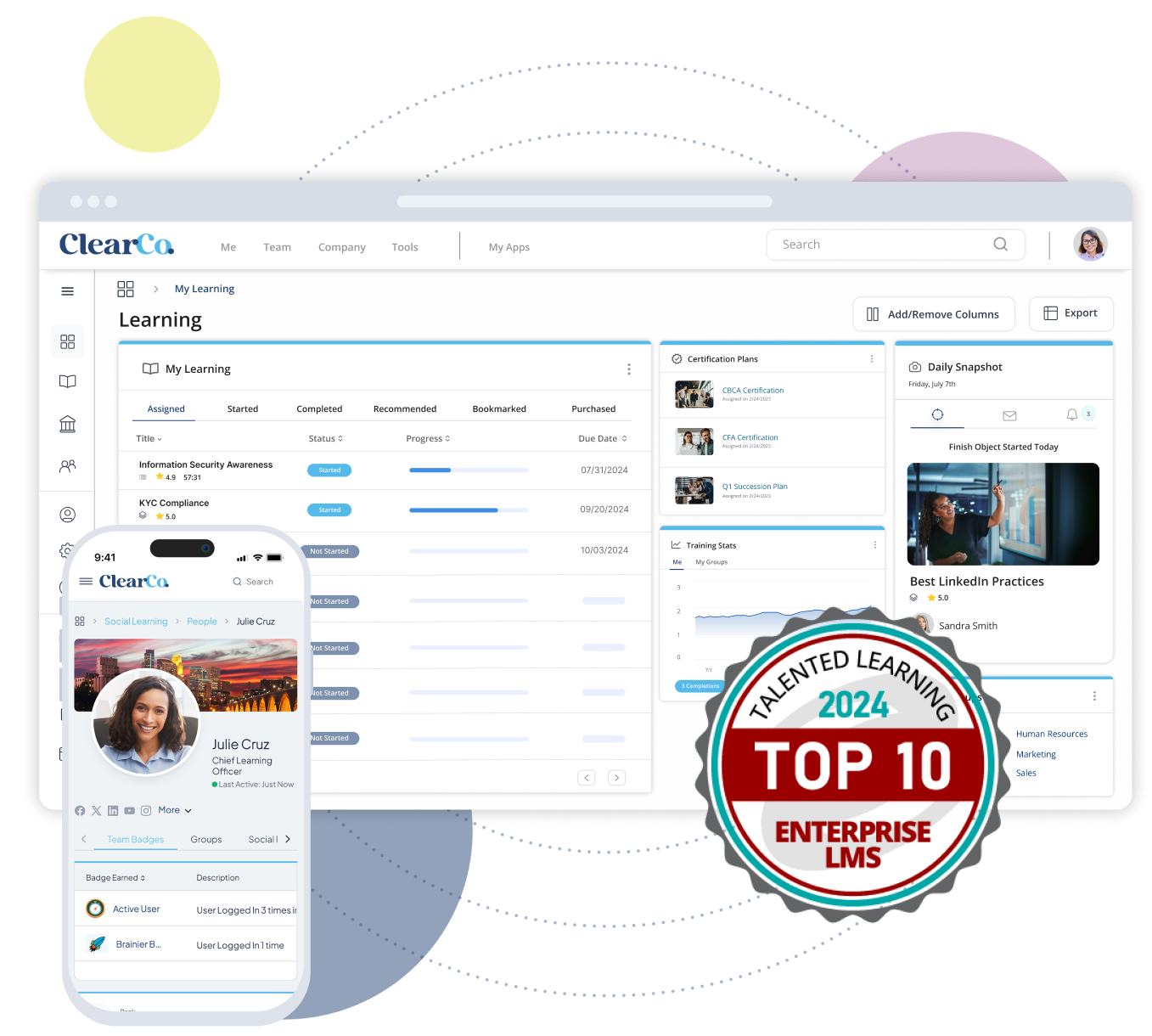
Start by using talent management software that centralizes skills data from hiring, performance, and learning. A learning management system (LMS) with skills visibility lets you build a shared skills library, tag employees’ profiles with their competencies, and report on gaps at the role, team, or department level.
2. Conduct Regular Skills Assessments
Keep track of current and emerging skills regularly so you know where your employees stand. Use a combination of manager input, self-assessments, and, where possible, practical evaluations so skills data stays current. Short, frequent check-ins give you a near-real-time view of who can do what today and where to focus learning initiatives next.
3. Create Internal Visibility & Skills-Sharing Opportunities
Make it easy for employees and leaders to discover internal talent. Use skills-based directories, project marketplaces, or internal gigs so recruiters and hiring managers can search for people by capability rather than just job title or department. This strategy taps into your pool of hidden experts and supports internal mobility.
4. Foster a Continuous Learning Culture
If continuous learning is an important part of your company culture, treat skills conversations as an everyday — not an annual — activity. Encourage managers to discuss skills in one-on-ones, give employees time for development, and recognize people who build and share new capabilities.
5. Integrate Skills Into Hiring & Mobility Processes
HR and L&D can work together to update job descriptions, interview guides, and promotion criteria to emphasize skills over tenure or credentials. This helps recruiters surface internal candidates and gives employees a clearer sense of what it takes to move into new roles.
6. Train Leaders in Skills-Based Talent Management
Equip managers and HR business partners to read skills data, spot gaps, and apply it to talent strategies. When leaders know how to translate skills insights into hiring and development decisions, visibility turns into action.
Get Visibility Into Your Organization’s Skill Gaps With ClearCompany
If you’re feeling the pressure of skills shortage, a lack of visibility could be slowing you down even more. With ClearCompany, you can connect hiring, performance, and learning data to build a living, skills-based view of your workforce.
Ready to uncover hidden talent and close critical gaps faster? See how ClearCompany can improve skills visibility and support your L&D strategy.