Key takeaway: Employees want flexible, personalized learning that fits into the flow of work — not just top-down training assignments. Learning experience platforms deliver that with curated content, AI, and social features. When they’re part of a complete talent system, LXPs turn scattered training into a strategic driver of performance and retention.
Learning management systems (LMS) are getting an upgrade: enter the learning experience platform (LXP). We’ve entered a new era in the workplace where skills reign supreme. Learning and development (L&D) teams are rising to the challenge with modern systems enhanced by artificial intelligence (AI).
This tech shift is happening at the right time — the importance of continuous learning has never been more apparent. We’re in a “skills crisis,” with 49% of L&D professionals saying leadership is concerned employees don’t have the skills their business needs. L&D is a top priority for employees, especially Gen Z and Millennials.
Traditional, top-down compliance training simply isn't enough to retain top talent or close widening skills gaps. Employees want personalized learning experiences relevant to their skills and interests that they can access on their own schedule.
That’s where LXPs come in, shifting the focus from administration to the experience of learning. An LXP empowers your employees to drive their own development and prepares your organization to build a future-ready workforce.
What Is a Learning Experience Platform (LXP)?
Learning experience platforms are software designed to help employees discover, engage with, and apply learning content that’s most relevant to their roles, skills, and career goals. LXPs are learner-centric, using AI to recommend content, enable social learning, and integrate resources from multiple sources — like internal training courses, videos, articles, or external learning providers.
The goal is to create an engaging, personalized experience that fits into the flow of work and meets employees’ needs.
LXP vs. LMS
Traditional LMSs manage structured training programs, like compliance-related courses, in a digital learning environment. The systems centralize content and standardize delivery. They also make it easy to assign training, track completions, and report on certifications.
LXPs, on the other hand, focus on the learner experience and ongoing skills development. They pull in content from multiple, L&D-approved sources and use AI to recommend what each person should learn next. Social features, user-generated content creation, and optional gamification make it easier for employees to stay engaged and learn from each other.
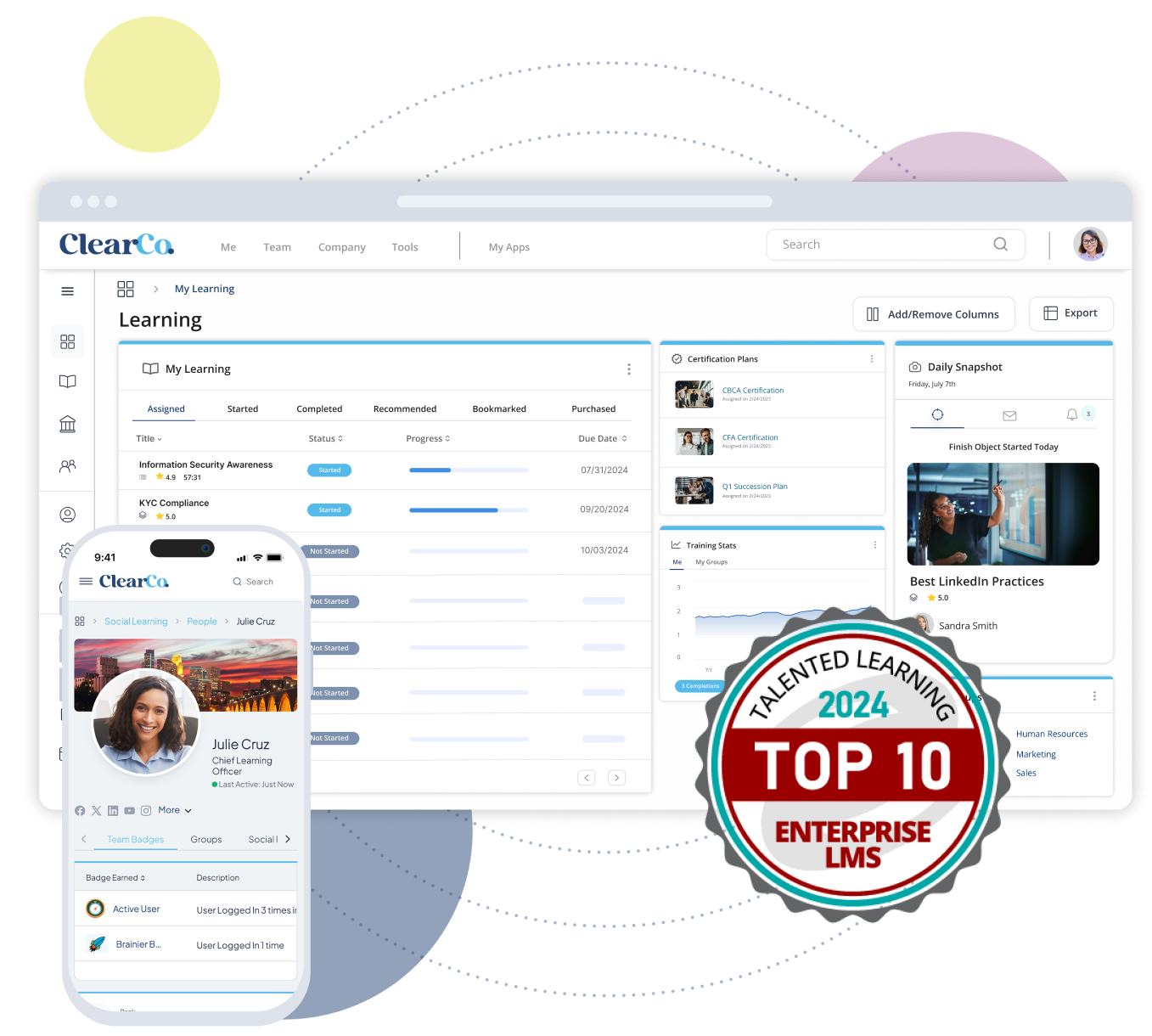
Instead of managing two separate systems, the best platforms now combine LMS and LXP capabilities in one learning ecosystem. You get the structure, compliance, and training records you need, plus the personalization, discovery, and self-directed learning your employees expect. That unified approach makes it easier for L&D to prove impact, keep content relevant, and take a modern approach to learning without adding extra tools to the tech stack.
Key Features of Learning Experience Platforms
Learning experience platforms look a bit different, but they share some core capabilities. These features create a learning environment that feels intuitive for employees and manageable for L&D teams.
1. Custom and Curated Learning Content
LXPs give you the flexibility to combine custom training with curated, high-quality content from trusted external sources. Your team can build role- and industry-specific courses, then layer in articles, videos, and bite-sized microlearning opportunities so employees always have something relevant to learn next.
In an AI-powered learning experience platform, recommendations surface the right mix of content based on skills, goals, and behavior. That saves your L&D team hours of manual curation while delivering highly personalized learning paths to your employees.
2. Social Learning
Social — or collaborative — learning features in LXPs make it easy for employees to share knowledge, supplementing their online courses. Discussion threads, comments, and sharing tools encourage subject-matter experts to contribute tips, examples, and resources. Over time, that social layer helps capture institutional knowledge and supports successful L&D programs grounded in real work.
3. Gamification and Engagement Tools
Badges, points, leaderboards, and challenges make learning more interactive and rewarding. They nudge learners to complete courses, come back more often, and keep training visible in busy schedules.
4. Advanced Analytics and Tracking
LXPs track more than logins and completions to show what learners are actually doing and what’s making an impact. You can see which topics are most in demand, which content formats perform best, and where learners drop off. Those insights help you refine your strategy, demonstrate outcomes, and better align with business priorities.
5. AI Capabilities
AI helps LXPs deliver targeted content recommendations at the right time, adapting to learner behavior and performance. Features like skills-based suggestions, automated tagging, and predictive suggestions reduce manual work and create smoother learning journeys. The rise of AI in L&D means these capabilities are quickly becoming a must-have if your company wants to scale personalized learning.
6. Integration
LXPs work best when they are part of a connected talent ecosystem rather than a standalone tool. In a unified talent management platform, learning sits alongside performance, goals, and recruiting so development is tied directly to career growth and business priorities.
Integrations with your HRIS, performance, and recruiting systems mean your system can automatically surface learning in context. An LXP can suggest courses during reviews, after promotions, or when employees move into new roles. That connected data gives you a clearer view of how learning affects performance, engagement, and retention across the entire talent lifecycle.
Benefits of Using Learning Experience Platforms
When all of those features come together in a robust LXP, they deliver tangible benefits for learners, managers, and the business. Traditional training approaches can’t match that.
1. Personalized Learning
LXPs make it easier to deliver training that feels tailored to each employee. AI-driven recommendations and skills-based learning paths help employees focus on what matters most for their current role and long-term goals. That level of personalization is vital for L&D programs that actually change behavior and build in-demand skills.
2. Enhanced Learner Engagement
Intuitive interfaces and on-demand access help LXPs compete with the consumer experiences employees are used to in their software. When training is easy to find, relevant, and available on any device, learners are more likely to come back on their own. Social and gamified elements provide extra motivation and keep learning visible between formal training events.
3. Central Learning Content Database
Instead of scattering courses, videos, and resources across different tools and folders, an LXP brings everything together in one place. Employees know exactly where to go, and L&D teams get a single home for managing, updating, and retiring content. A centralized hub also makes it easier to maintain quality standards and avoid duplicate or outdated materials.
4. Continuous Learning
LXPs support the continuous learning culture employees crave. Microlearning, searchable content, and tailored recommendations encourage employees to drop in for quick refreshers or explore new topics. That ongoing development is essential to keep up with changing business needs and the shrinking shelf life of employees’ skills.
5. Data-Driven Insights
By tapping into usage metrics, skills data, and outcomes, LXPs give your L&D team a more complete picture of how learning is performing. You can see which initiatives drive the most engagement, where key skills are growing, and where there are gaps. Data-backed insights enable you to continuously optimize your learning strategy with confidence.
Improve Your Learners’ Experience With ClearCompany Learning
Employees expect more than a course catalog and annual compliance training. They want tools that help them build skills, grow their careers, and stay ready for what’s next. A unified LMS and LXP gives your organization the structure it needs and the experience learners expect.
The right solution makes it easier to deliver personalized content, support collaborative and self-directed learning, and measure the impact of training. Turn one-off efforts into strong L&D programs that keep your workforce engaged and future-ready.
If your current tools make learning feel fragmented or hard to manage, it may be time to rethink your approach. Explore how a combined LMS+LXP like ClearCompany can modernize your tech stack and help you build a scalable, skills-first learning strategy.